
Treatment
- Home
- >
- Treatment Options
- >
- What is Kidney Supportive Care?
Follow us on Facebook
Follow us on Instagram


Follow us on YouTube
Follow us on TikTok
What is Kidney Supportive Care?
Kidney Supportive Care (KSC) is a patient-centred clinical approach to kidney care that puts patients at the centre of all decisions. It aims to enhance the quality of life for patients with advanced kidney disease, particularly those on dialysis.
The care is delivered by a team of healthcare professionals — including nephrologists, palliative care physicians, nurses, and social workers — and is tailored to each patient’s medical condition, goals, and values.

Frequently Asked Questions
Start of Dialysis
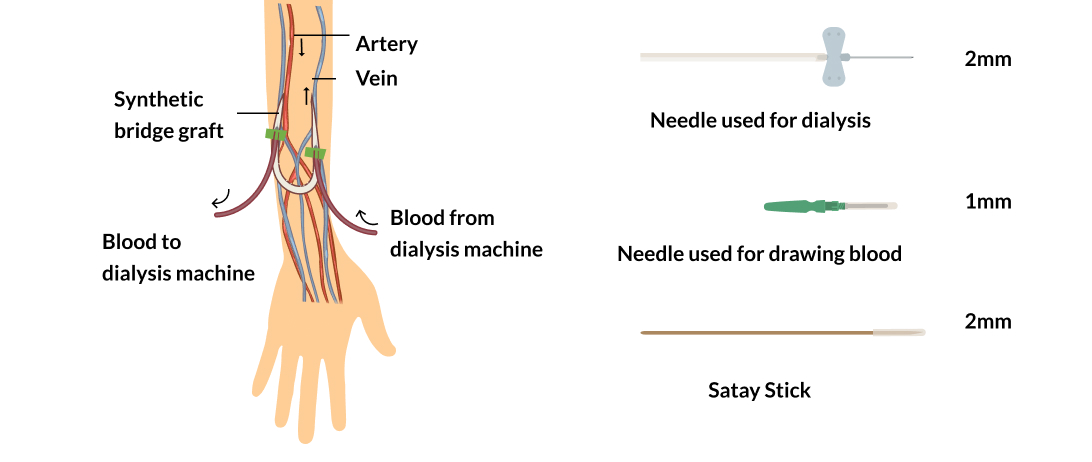
Before dialysis begins, 2 needles will be inserted into the vascular access, one to remove the blood and the other to return cleansed blood to the body.
The patient is connected (via tubing) to the dialysis machine through a vein in the arm, the blood is pumped from the body to a special filter (dialyser), which is made of tiny capillaries.
During Dialysis
Blood is continuously pumped through the dialyser, where waste products and excess water are removed.
The blood becomes purified when the waste products diffuse from the blood across the membrane of these tiny capillaries in the dialyser. Purified blood is then returned to the patient’s body through larger tubes.

Dialysis Frequency
Haemodialysis is performed thrice a week at the dialysis centre, with each session lasting about 4 hours, depending on the body size and medical condition.
At NKF, patients choose between 2 sessions i.e. Mondays, Wednesdays and Fridays or Tuesdays, Thursdays and Saturdays. They can also choose the morning, afternoon or evening timeslot.
Key components include:
✓ Symptom management (e.g. pain, itch, fatigue)
✓ Psychosocial and emotional support
✓ Advance care planning
✓ Guidance in making complex medical decisions
Goal:
To help patients live as well as possible for as long as possible, and to ensure that end-of-life care, when needed, is comfortable, dignified, and in accordance with the patient’s wishes.
All dialysis patients can benefit from Kidney Supportive Care, especially those who:
✓ Find dialysis increasingly burdensome
✓ Experience significant decline in quality of life
✓ Have multiple medical conditions or frequent hospitalizations
✓ Wish to discuss future care needs, prognosis, or end-of-life preferences
Supportive care is also appropriate for patients who:
✓ Need help with advance care planning
✓ Want to align treatment decisions with their personal values and goals
Benefits of Kidney Supportive Care
✓ Supports patients in coping with illness and life transitions, regardless of life expectancy
✓ Provides expert management of symptoms such as pain, breathlessness, fatigue, and depression
✓ Helps establish personalized care goals
✓ Facilitates coordination of care, including referrals to specialist palliative care or hospice services
✓ Aims to reduce unnecessary hospital visits and improve comfort at home
“Supportive care does not mean stopping care — it means choosing the right kind of care
that aligns with your needs.” — KDIGO, 2020
No. Kidney Supportive Care focuses on maintaining the best possible quality of life and does not replace dialysis or other active treatments.
However, as a patient’s condition progresses, KSC can transition into end-of-life care. This ensures that the patient receives comfort-focused support when treatment is no longer effective or desired.
If you or your loved one would like to learn more about Kidney Supportive Care, please speak with your Nursing Manager or Social Worker. They will guide you through available options and answer your questions.
They can help you understand how supportive care might fit into your current treatment plan and connect you with the right specialists if needed. Remember, asking about supportive care doesn’t commit you to anything — it’s simply gathering information to help you make the best decisions for your situation.